Client:
Counterpart+Partners
Industry:
Goverment
The Challenge:
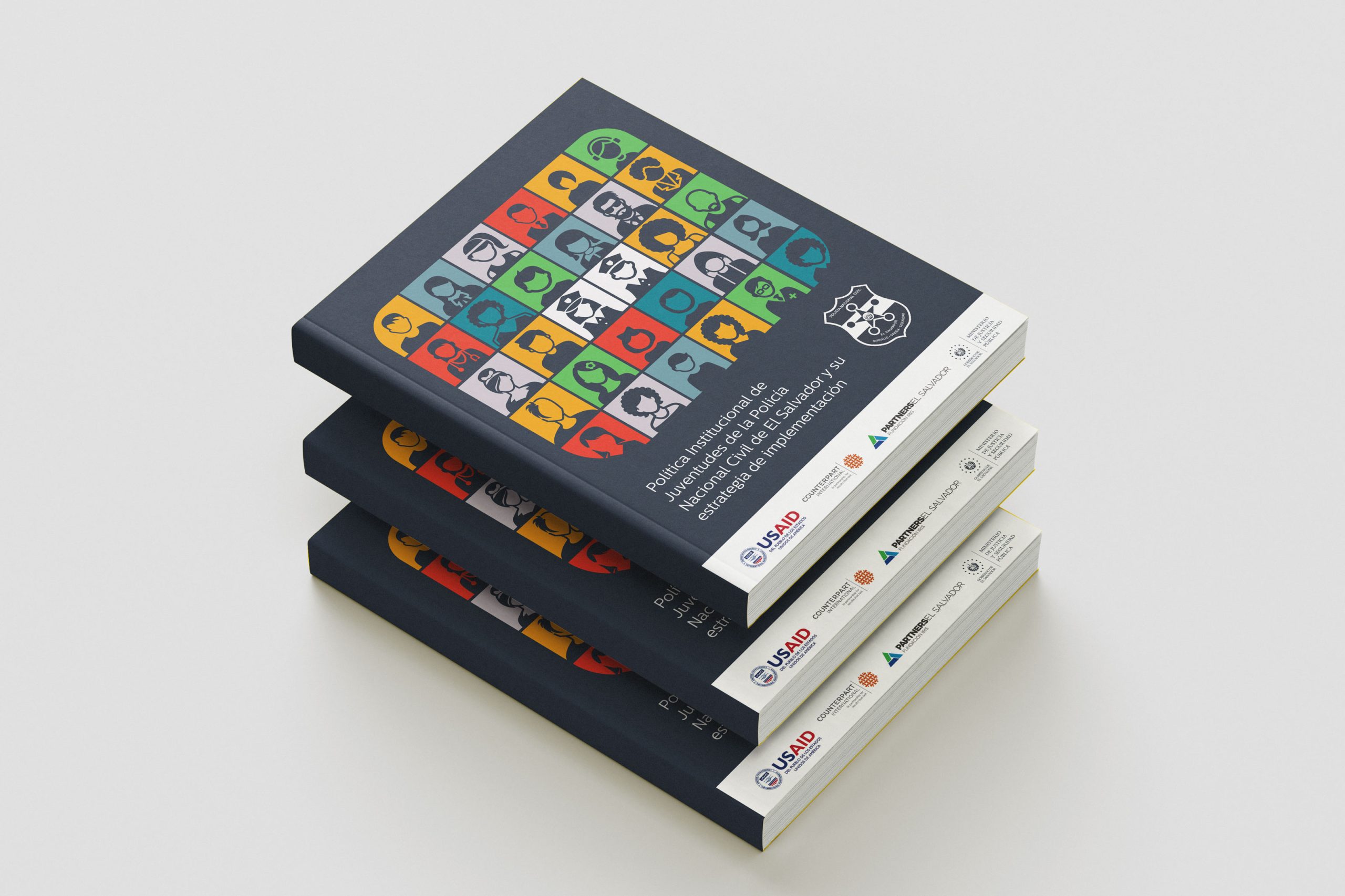
This project represented a challenge of great sensitivity and responsibility. The objective was to design a document that would serve as a bridge between the National Civil Police of El Salvador and the country’s youth. The research, titled «Institutional Youth Policy of the National Civil Police of El Salvador and its implementation strategy,» sought to address the historical duality with which youth have been treated: viewed on one hand as a vulnerable group and, on the other, as the main generator of violence. Our role was to transform this complex research, full of nuances, data, and concepts, into a clear and accessible editorial tool.
The Solution: A design that builds trust and guides the reader.
Our design strategy focused on creating a document that was simultaneously serious, institutional, and legible, to facilitate clear and respectful communication.
-
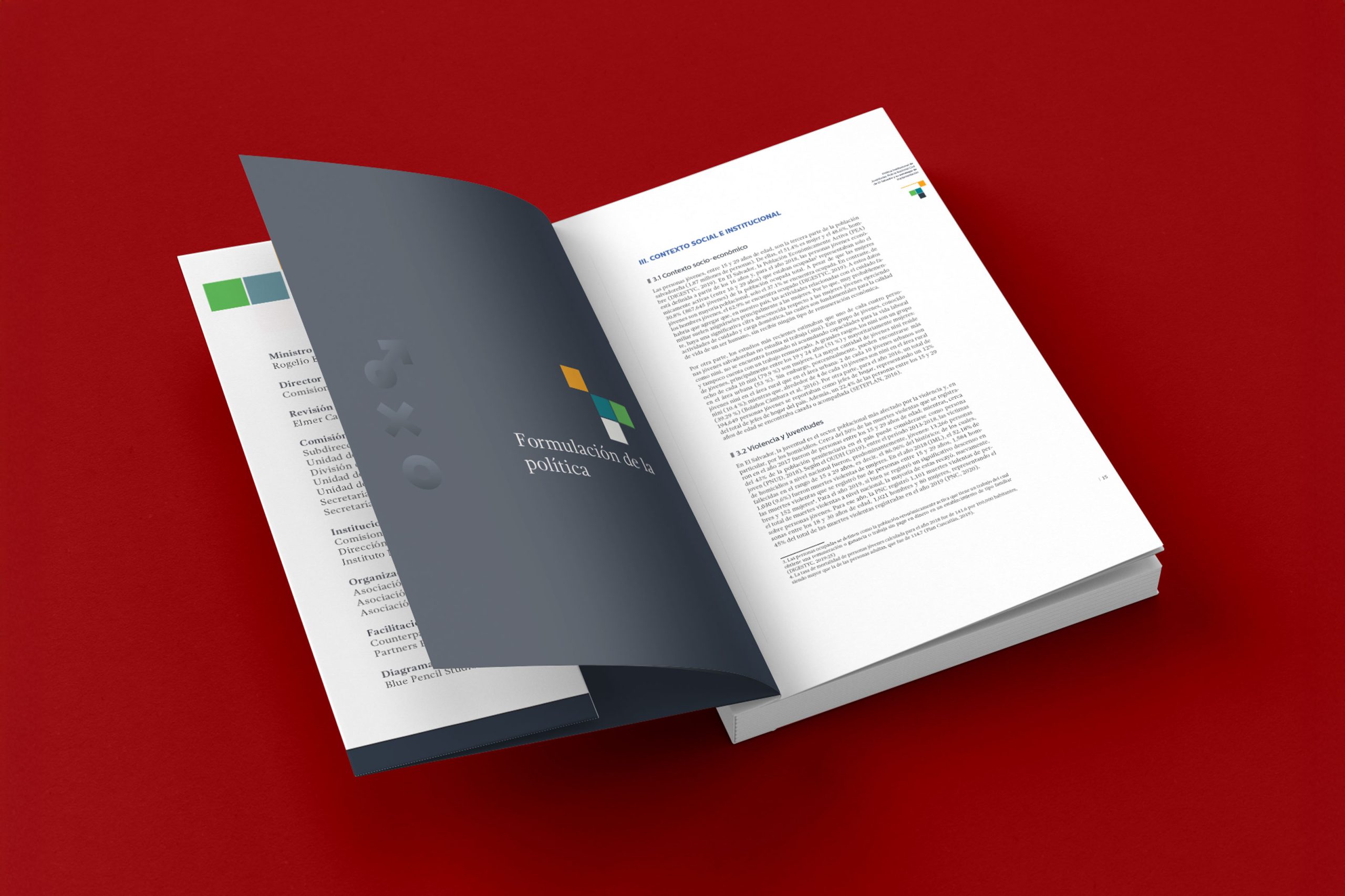
Visual Hierarchy and Iconography: We organized the content intuitively, using a clear visual structure to guide the reader through the research findings, the dialogue process between the PNC and youth organizations, and the policy proposals. To further facilitate navigation, we created a set of custom iconography for each section and key theme of the document. These icons not only added a unique visual element but also served as visual cues for the reader to quickly identify relevant sections.
-
Design for Legibility: We chose suitable fonts for prolonged reading and optimized the formats for comprehension, ensuring the document would serve as a practical and useful tool for the diverse audiences, both within the police institution and for the youth communities.
The Impact:
The final document is not just a publication; it is the tangible result of a process of dialogue and collaboration between youth, the police, and the government. The editorial design became an essential component for the dissemination of the policy, allowing this valuable information to reach a wider audience. Ultimately, the project contributed to the goal of building trust, reducing stigmatization, and strengthening the relationship between the police and youth in El Salvador.